Tuesday, 13 November 2012

In costume I have decided to relate my garment to one of the characters in a Rakes Progress. I have chosen to base my garement on Tom's old hag wife, shes an interesting character as she is only in one painting so this makes her kind of mysterios and we dont know alot about her background so I could interprit her in any way I want. She is quite wealthy as that is why Tom marries her because he lost his fotune so her clothes would be higher class.


I am going to put ruffles and pletes on my garement, experimenting with differnt fabrics.
Here is an article I found on the Telegraph website discussing everday fashion in the 18th century. From the lower class to the higher class. Also a review on the book "the dress of people".

Everyday fashion in 18th-century England


The Dress of the People, by John Styles
 
Louise Carpenter reviews The Dress of the People by John Styles
The rustle of a calico gown; the swish of a red woollen cloak; the pocket watch pulled out with a flourish and the chink of silver buckles - who would associate such panache with the 18th-century plebeian class?
In The Dress of the People, John Styles, the historian who created the V & A's British Galleries, sets out to prove that the 18th-century poor were just as willing fashion victims as the lords, ladies, country squires and City merchants who comprised the nation's elite.
His argument moves from the restoration of Charles II in 1660 through to the Great Reform Act of 1832, a period in which ordinary people were experiencing an improvement in all other aspects of their material lives (tea and sugar, the fruits of the mercantile and colonial expansion, changing diets). But it is in their clothes, Styles argues, that we see this transformation most clearly.
This is not the consensus view among historians. Styles tells us that the working classes, from small farmers and labourers to seamstresses, have always been considered too poor to acquire the means to be fashionable. Yet, as we know well today, style is not simply about affluence.
Though wealth might buy you a statement handbag, you can look trendy for peanuts. Styles shows us that it was the same in the 18th century. Not everybody cared for clothes - "sullen resistance to fine dressing co-existed with desperate efforts to be genteel" - but most people, including the poor, used them to make judgments about others.
One of the most striking aspects of Styles's book is how the vagaries of 18th-century fashion mirror today's.
The working-class apprentice girls in the fashionable shops in the New Exchange on the Strand and the Royal Exchange in the City were extraordinarily overdressed and overdone in their presentation. When Voltaire arrived in England in 1726 and saw such girls along with servants and country people in their "holiday clothes" at a fair in Greenwich, he mistook them for "people of fashion".
Dressing above one's station became the bĂȘte noire of newspapers, periodicals and pamphlets.
Styles shows us that poor people interested in fashion wore simplified versions of elite styles, closest in form to the clothes worn by their social superiors when in the country or at home as morning wear.
Silk and muslin were beyond their reach, but advances in cotton manufacture made fancy prints cheaper. The poor cared about such things and saved for them. Outfits were usually run up by specialists rather than ready-to-wear, with seamstresses deploying similar tricks to today's high street (catwalk looks in cheaper fabrics) to create visually arresting garments.
Furthermore, much like today's symbiotic relationship between "high end" and "street", the dress of the plebeians influenced smarter circles. Domestic and rural ways of putting together a look seeped into the beau monde. That is not to say rich men swanned around in farm labourers' smock frocks or clogs - although had David Beckham lived then, maybe he would have - but Styles reveals that the round hats worn by the poor men, and their habit of going wigless, pre-dated equivalent changes in fashion.
One Frenchman noted in 1747 that in London "masters dress like their valets; duchesses copy their chamber-maids". As now, dressing down and aping the poor was an act of rebellion, especially for wealthy young men.
Women were not immune either. Why would titled ladies, used to the finest silks, suddenly think it au courant to wear an apron like a washerwoman? Because, writes Styles, "the virility and unaffected naturalness associated with plebeian dress exercised a powerful hold of their own."
The Dress of the People is meticulously researched, using such eccentric sources as the descriptions of stolen clothes in the records of criminal trials; probate inventories; advertisements describing runaways, and small pieces of fabric left at the London Foundling Hospital by mothers who abandoned their babies. There are household budgets, too, which reveal the effect of the pram in the hall on a stylish plebeian wardrobe.
The weight of such research can, at times, make it difficult, dense reading. And yet, like the clothes it discusses, the book weaves a spell, pulling us into a world in which the ability to choose a showy handkerchief or a fashionable ribbon was, for many, their only expression of freedom.
Toms Old Wife in a Rakes Progress

Many wedding gowns designed in the modern era bear the print of the fashion that described medieval times, such as the 18th century wedding gowns inspire nowadays the creations of many bridal fashion designers in their attempt to design impressive patterns for the eccentric brides. In these early years of the 18th century there was the formal dress that represented a stiff-bodice mantua which was actually a closed petticoat which over time got replaced with more relaxed and easy to wear dresses.

18 century wedding gownSource
18 century wedding gown

Later on, this formal style described the fitted bodice at the front side which was possible by making use of a tightly laced corset, while the back side was designed with loose box pleats known as ‘Watteau’ pleats because they resembled to those in the Antoine Watteau paintings. The skirt which was very widened starting with the waistline was either closed in the front side or open to present a petticoat which was most of the time of a contrasting color, but also coming in matching color this time featuring some embroidery or something to make it different than the rest of the skirt.

18 century wedding gown Source
18 century wedding gown

The bodices could be also open in the front while being filled on the inside part of the opening with decorative pattern. As to the sleeves, they were more commonly shaped in the bell or trumpet format narrowing towards the elbow area to expose frills or lace that trimmed the sleeve edge. Later on these frills were replaced by separate ruffles known as ‘engageantes’.

18 century wedding gown Source
18 century wedding gown

You can find many such 18th century wedding gowns inside history museums, as well as online with many images to showcase the fashion during those times. There are as well many dedicated bridal fashion designers who have found their inspiration within these collections of 18th century wedding gowns to recreate this fashion with modernistic touches.

They are lucky to be offered with a wide range of fabrics to use in their unique creations, not to mention their own power of imagination that helps to give birth to exquisite medieval inspired bridal apparel. One such designer is Theresa Blake who has managed to combine her skills as a couturiere with her long experience in the costumes making for TV and film to obtain great couture bridal wear as an alternative to the conventional bridal attire.

Tuesday, 16 October 2012

Hollywood Costume at the V&A Shop


The V&A's autumn exhibition, 'Hollywood Costume', explores the central role costume design plays in cinema storytelling. Bringing together over 100 of the most iconic movie costumes from across a century of film-making, it is a once-in-a-lifetime opportunity to see the clothes worn by unforgettable and beloved characters such as Dorothy Gale, Indiana Jones, Scarlett O'Hara, Jack Sparrow, Holly Golightly and Darth Vader. The V&A Shop proudly presents a range inspired by the transformative cinematic experience and exceptional costume design.


Fedora_T_Shirt_130.jpg
Fedora Hat T-Shirt - £15


This witty top lists the all important components of one of the 20th century's most beloved archaeologist's costume. Available in adult and children's sizes.


Bracelet_130.jpg
Red Carpet Bracelet - £25

This diamante Art Deco bracelet references the delicate and glamorous jewellery seen in period films such as 'Atonement', 'The Great Gatsby' and 'Titanic'
 

Jess_Wilson_130.jpg
'Titanic' Film Script by Jess Wilson - £45

Celebrating a classic scene from the film 'Titanic', Jess Wilson's print is packed full of vibrant illustrations and text providing a unique, alternative review of the original film. Giclee print on Somerset Enhanced 310gsm paper, limited edition of 125, signed and numbered, A2.
 

Tote_bag_130.jpg
Hollywood Stars Tote Bag - £5

The perfect tote bag commemorating your visit to the 'Hollywood Costume' exhibition.
 

Bookend_130.jpg
The End Bookend - £25

Witty bookends or perhaps 'book endings' that are inspired by well known film endings. Made in England.
 

Clapper_Board_130.jpg
Clapper Board - £7.50

Lights, Camera, Action! The perfect director's accessory for that first foray into film making.
 

Hollywood_Costume_130.jpg
Hollywood Costume by Deborah Nadoolman Landis, Editor - £35 Hardback

This landmark book celebrates, for the very first time, the costume designer’s contribution to the telling of the cinematic story in 100 years of Hollywood. Rocking the conventions of what is considered ‘costume’, Hollywood Costume reveals what is hidden in plain sight: that films are about people and it is the art of the costume designer who helps create those characters. This book looks at this process of transformation by analyzing some of the finest and most eclectic costumes from the most beloved films of the last 100 years. As well as essays by a wide variety of leading scholars, archivists and private collectors, the book incorporates contributions by key costume designers, actors and directors working in Hollywood today. Fabulous golden age of Hollywood costumes are juxtaposed beside all the contemporary classics including 'The Tramp', 'Ben Hur', 'Cleopatra', 'The Wizard of Oz', 'Gone with the Wind', 'Pirates of the Caribbean', 'Ocean’s Eleven', 'Sherlock Holmes' and 'Avatar'.

A-Z_Hollywood_style_130.jpg
A-Z of Hollywood Style by Sinty Stemp - £9.99 Hardback

A to Z of Hollywood Style brings together style advice from the good, the bad and the beautiful to explore the allure of some of the world’s best-loved film stars: Alfred Hitchcock on elegance, Sophia Loren on sex appeal and Edith Head explaining exactly how to make a woman more beautiful. This book includes the opinions of critics, designers and film directors, as well as the actors themselves. Including Joan Crawford’s five fashion rules and Marlene Dietrich’s tips for dressing on a budget, A to Z of Hollywood Style is packed full of stylish tips for would-be starlets, or simply those who long for a more glamorous age.

Hollywood Costume

  V and A Hollywood Costume Exibition

Victoria and Albert Museum


About the exhibition


Robert de Niro as Travis Bickle in 'Taxi Driver', 1976, costume designed by Ruth Morley. Columbia /The Kobal Collection
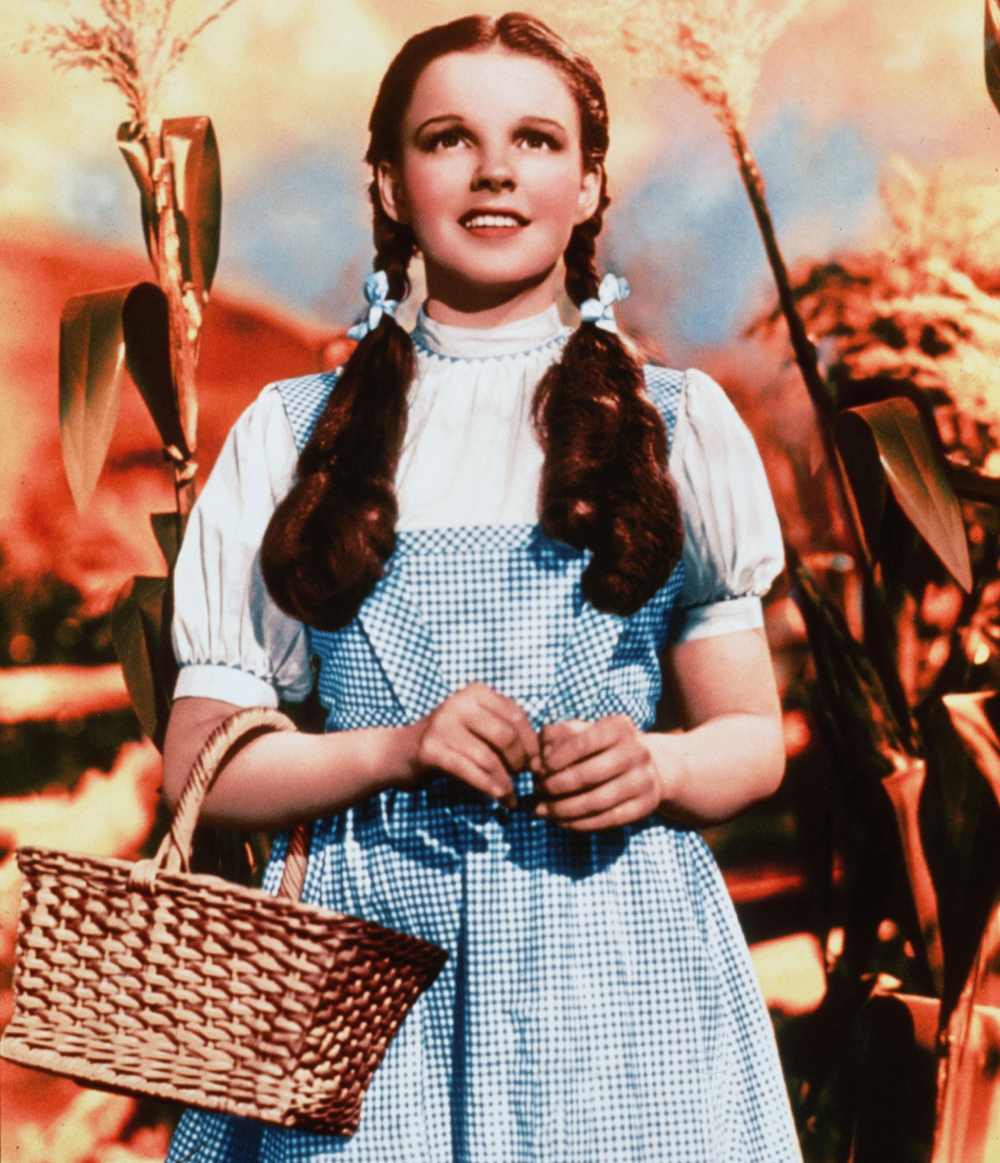
Dorothy Gale costume from 'The Wizard of Oz', designed by Adrian, 1939
'Clothes are never a frivolity, they always mean something' James Laver (1899–1975), first Keeper of the V&A Theatre Collections
Costume designers are storytellers, historians, social commentators and anthropologists. Movies are about people, and costume design plays a pivotal role in bringing these people to life. 'Hollywood Costume' illuminates the costume designer’s process in the creation of character from script to screen including the changing social and technological context in which they have worked over the last century.
This ground-breaking exhibition includes over 100 of the most iconic and unforgettable film characters from a century of Hollywood filmmaking, 1912–2012. 'Hollywood Costume' takes us on a three-gallery journey from Charlie Chaplin through the Golden Age of Hollywood to the cutting-edge design for 'Avatar (2009, Costume Designer Mayes C Rubeo, Deborah L Scott) and 'John Carter of Mars' (2012, Costume Designer Mayes C Rubeo): Act 1, Deconstruction, puts us in the shoes of the costume designer and illuminates the process of designing a character from script to screen; Act 2, Dialogue, examines the key collaborative role of the costume designer within the creative team; Act 3, Finale, celebrates the most beloved characters in the history of Hollywood and the ‘silver screen’.
These galleries are filled with cinema costumes that have never left the private and archival collections in California. Most of these clothes have never been publicly displayed and have never been seen beyond the secure walls of the studio archives.
Harrison Ford as Indiana Jones in 'Raiders of the Lost Ark', 1981, costume designed by Deborah Nadoolman. Lucasfilm/Paramount/The Kobal Collection

Act 1: Deconstruction

'On every film, the clothes are half the battle in creating the character. I have a great deal of opinion about how my people are presented. We show a great deal by what we put on our bodies.' Meryl Streep
Movies are about people. It’s the people, the characters in the stories, who hold our attention and who are of endless fascination to the audience. The people are the emotional core of every movie and it’s their story that moves us. The costume designer must know 'who' a character is before they can design their costume. No matter the era that the story takes place, the audience is asked to believe that the people in the movie are real and that they had a life prior to the start of the movie. We join our cast of characters at one moment in their life. Everything about them must resonate true, including their clothes.
Whatever the genre, the designer’s creative process starts with research. This is explored in case studies including 'Fight Club' (Costume Designer Michael Kaplan, 1999) and 'Raiders of the Lost Ark' (Costume Designer Deborah Nadoolman, 1981) and concludes with a dissection of designer Alexandra Byrne’s 'Elizabeth: The Golden Age' (2007) accompanied by a royal court including Bette Davis as 'The Virgin Queen' (Charles LeMaire, Mary Wills, 1955), 'Marie Antoinette' (1938, Costume Designer Adrian), 'Marie Antoinette' (2006, Costume Designer Milena Canonero), 'Dangerous Liaisons' (1988, costume Designer James Acheson), 'Shakespeare in Love' (1998, Costume Designer Sandy Powell).
Kate Winslett as Rose DeWitt in 'Titanic', 1997, costume designed by Deborah L Scott. 20th Century Fox/Paramount/The Kobal Collection
Kate Winslett as Rose DeWitt in 'Titanic', 1997, costume designed by Deborah L. Scott. 20th Century Fox/Paramount/The Kobal Collection

Act 2: Dialogue

'What’s great about costume is it’s the visual representation of the internal side of people. That’s what I love.' Tim Burton
Dialogue examines the intimate creative collaboration of great filmmakers and their costume designers with four pairs of especially commissioned on-camera interviews. Over the past century, costume designers work within a rapidly changing social and technological landscape: from silent to sound, black and white to Technicolor and from the Golden Age to 20th-century multi-national corporations and art house ‘indies’. Costume designers have embraced innovations such as Joanna Johnston’s slinky bombshell Jessica Rabbit in 'Who Framed Roger Rabbit' (1988) and 21st-century motion-capture, exemplified by Deborah L Scott, and Mayes C Rubeo who helped bring the magical characters of 'Avatar' (2009) to life.
The section concludes with the ‘Art of Becoming;’ two case studies with the participation on camera of the great American actors, Robert De Niro and Meryl Streep. Both actors, celebrated for their transformative skills, will discuss their use of costume to channel their new ‘people.’ Five costumes chosen from their most memorable roles will be on view.

Act 3: Finale


Johnny Depp as Jack Sparrow in 'Pirates of the Caribbean: At World's End', 2007, costume designed by Penny Rose. Walt Disney Pictures/The Kobal Collection
'If you (the costume designer) can make the audience feel the actress is the character, then it’s a good job of costuming.' Edith Head

Entering the last gallery, our visitors will enter the most glamorous Hollywood nightclub in the world, filled with familiar famous faces who have taken their permanent place in international popular culture.
Finale is a celebration of Hollywood heroes, villains and femme fatales. Screen sirens including Mademoiselle Amy Jolly (Marlene Dietrich) in 'Morocco' (1930, Costume Designer Travis Banton), Sugar Kane Kowalczyk (Marilyn Monroe) in 'Some Like it Hot' (1959, Costume Designer Orry-Kelly), Holly Golightly (Audrey Hepburn) in 'Breakfast at Tiffany’s' (1961, Costume Designer Hubert de Givenchy), Fanny Brice (Barbra Streisand) in 'Funny Girl' (1968, Costume Designer Irene Sharaff), Roxie Hart (Renee Zellwiger) in 'Chicago' (2002, Costume Designer Colleen Atwood), in Cecilia Tallis (Keira Knightly) 'Atonement' (2007, Costume Designer Jacqueline Durran) will be seen alongside a dynamic grouping of action, fantasy, sci-fi and superhero characters including 'Matrix' (1999, Kym Barrett), 'Harry Potter' (2001, Judianna Makovsky), 'Twilight: New Moon' (2009, Tish Monaghan) and 'Spider-man' (2002, James Acheson)
Costumes are one channel by which a character is transformed from the written page to a multi-dimensional people. The costume designer gives the clothes to the actor, the actor gives the character to the director, and the director tells the story. When a character and a film capture the public’s imagination; the costumes can ignite worldwide fashion trends and influence global culture. Cinematic icons are born when the audience falls deeply in love with the people in the story. And that’s what movies, and costume design, is all about.
Deborah Nadoolman Landis
Senior Guest Curator, 'Hollywood Costume'
Nottingham Trent University

Fine Art, BA (Hons)
 
Immersive light installation by student Pete Ronal
This course is a fusion of imagination, innovation, critique and research. It has both contemporary and traditional approaches and historical and theoretical context. This inspiring course gives you the freedom to really grow as an artist.
 
Key information
UCAS code
W100 BA/FA
Entry requirements
Entry requirements may vary for Clearing 2012. Please call 0115 848 6000 for details.
You will need:
  • a minimum of 240 UCAS tariff points
  • GCSE English grade C or above (literature or language)
  • GCSE Maths or Science grade C or above, or equivalent

Mature applicants will be considered on an individual basis.
The 240 UCAS tariff points needed for entry to this course should be taken from a minimum of two A-levels or equivalent qualification (such as a BTEC National Diploma or art and design foundation course). Additional tariff points obtained from AS-levels, where the subject was not continued to A-level, will also be accepted towards the 240 UCAS points required.
If you are unsure whether the qualifications you have, or are currently studying for, meet the minimum entry requirements for this course please contact us before submitting an application through UCAS.
International and EU students also need to meet the English language requirements. Also see the full list of alternative qualifications for EU and international students.
Course length
Three years full-time
Study location
City site
                                                      

Why choose this course?

One of the very few self-directed and interdisciplinary fine art courses in the UK, our BA (Hons) Fine Art encourages you to develop a personal and independent art practice. The course fuses:
  • imagination
  • innovation
  • critique
  • research
  • contemporary and traditional approaches
  • an appreciation of historical and theoretical context.
A flexible structure means you can focus on one or two media best suited to your ideas.

Student work gallery

Have a look at some of the work created on this course in our Fine Art student work gallery.

Art and Design Degree Shows 2012

Our final-year Art and Design Degree Shows will be taking place in May and June at the University. 20 courses will be showcasing inspirational work across the campus and the shows are open to the public.
The Holocaust Centre trip
The Holocaust Centre
http://holocaustcentre.net/


I found that the trip to the Holocaust Centre helped with my research for a Rake's Progress because I was looking into the last painting where Tom is in Bedlam mental hospital and the two higher class women were paying to have a look around, this links to the divide of the classes the way that it did in the Holocaust with seperate races of people, people being divided up into Gettos and such.


Holocaust Centre open Sunday 18th November and 2nd December 2012

The Holocaust Centre will be open Sunday 18th November 2012, 12.00-4pm and Sunday 2nd December 2012, 10.30am-4pm. Simon Winston, who survived the ghettos and was later in hiding will be speaking at 1pm. The Holocaust Exhibition, the Journey Exhibition and Memorial Gardens will also be open to Visitors. We look forward to seeing you!

Welcome to The Holocaust Centre


Click here to download the latest Holocaust Centre newsletter

Click here to download our behind the rose leaflet

About the Holocaust Centre

2012 Opening times

For the 2012 opening times and Survivor speaker list, please click here
The Holocaust Centre promotes an understanding of the roots of discrimination and prejudice, and the development of ethical values, leading to a greater understanding within society. The Centre uses the history of genocide as a model of how society can break down, and emphasises how current and future generations must carefully examine and learn from these tragedies. The Centre promotes respect for human rights, equal opportunities and good citizenship, which has greater resonance than ever in our culturally diverse society.
The Holocaust Centre provides a range of facilities for people of all backgrounds to explore the history and implications of the Holocaust. These include the Holocaust exhibition, The Journey, memorial gardens, bookshop and coffeeshop. There are also seminar and research facilities for students, teachers, scholars, professionals and many others.